

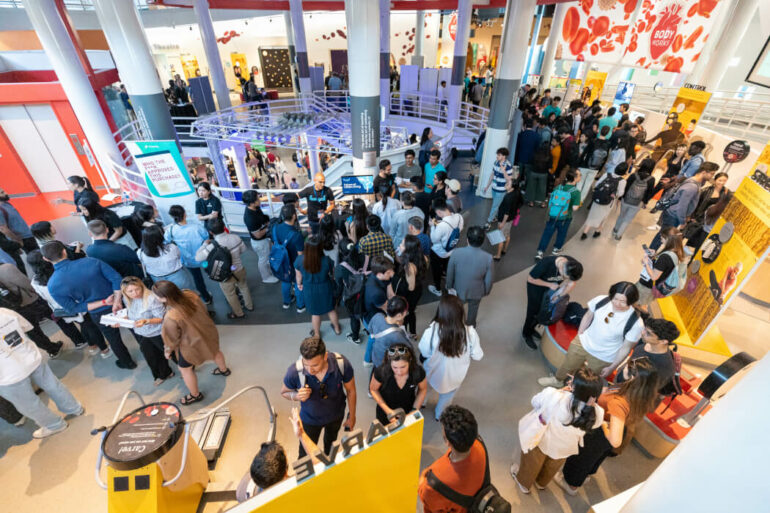
Vancouver Startup Week (VSW), a volunteer-run tech event, finally returned to its in-person format for the first time since the COVID-19 pandemic.
The event ran from June 2 to June 9 at various locations across downtown Vancouver. The vibes were postive: event venues were often visibly packed and noisy as attendees chatted, giving the week a boisterous feel.
Event locations were scattered around the city, while the BCIT Tech Collider and Good Co. Granville played host to a number of featured events.
Although it can mean a lot of rushing around for attendees, organizers believe the spread-out nature of the event adds to its charm.
“A big focus of Vancouver Startup Week is networking and meeting others,” said VSW co-chair Vivian Lago. “Having events at different spaces around town allows for a change of scenery that helps promote organic conversations and relationships to form, while enjoying our city during walks from one venue to the next.”
Partner companies stepped in to host events under the VSW umbrella. Notable partners included RBCx, Ernst & Young, Osler, Fasken, Innovate BC, Switchboard Public Relations, and Boast.ai.
VSW sets itself apart from larger tech events like Startupfest and Collision by its community-driven model; events are organized by members of the Vancouver tech and startup ecosystem and managed by a team of volunteers headed by VSW co-chairs Katty Wang and Vivian Lago.
The more tech conferences, the merrier?
Buzz about the future of Collision was a hard-to-miss undertone at this year’s iteration of VSW, particularly with the organizers of SAAS NORTH announcing a homegrown alternative in Vancouver amid the uncertainty around Collision’s future in Toronto. BetaKit’s reporting has revealed an emerging behind-the-scenes effort to get the conference to consider Vancouver as its future home.
“Let’s make sure we keep Collision in Canada. And whatever it takes to keep it in Canada, we’ll be supportive.”
– Mayor Ken Sim
Following his VSW fireside chat with Launch Academy’s Ray Walia, BetaKit asked Mayor Ken Sim if he was working to pitch Collision coming to Vancouver. Mayor Sim responded: “I think the primary goal here is let’s make sure we keep Collision in Canada. And whatever it takes to keep it in Canada, we’ll be supportive.”
Sean Verret, a partner at Ernst & Young and VSW panelist, was excited by the idea of more tech conferences coming to Vancouver, whether international or homegrown.
“Anytime a conference like Collision comes anywhere, it’s going to spur lots of innovation, lots of great conversation, and it’s going to help feed the economy. So, bringing Collision here would be a great opportunity for the city and for the province,” Verret said.
He said he was also supportive of the alternative prospect of a new, local tech conference focusing on the western provinces or just B.C.
Lago echoed the sentiment.
“Vancouver needs more large-scale conferences that our local entrepreneurs and businesses can take advantage of and to attract international guests and investors to our world-class city,” she said, adding there is room for more than one major event “as long as organizers communicate and work to collaborate and complement each other for the benefit of the community.”
Vancouver to hire chief AI officer, AI expert approves
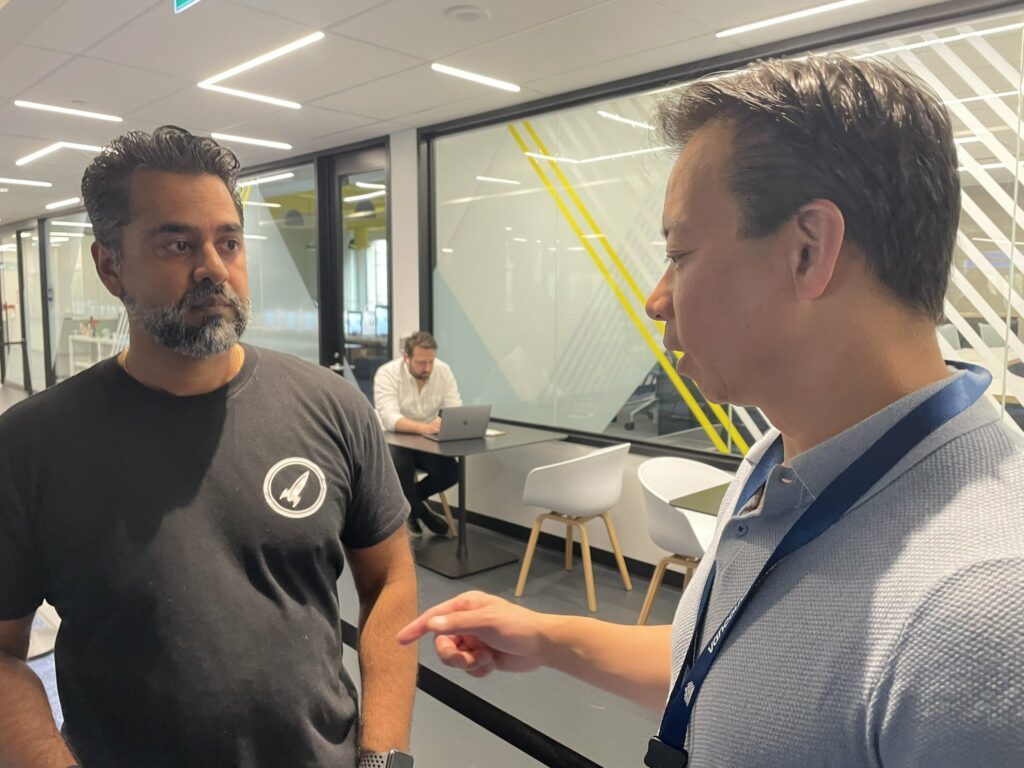
At a fireside chat, Mayor Sim touched on a number of topics, including promoting Vancouver’s standing among technology-focused cities and shepherding AI development at the municipal level.
To that end, Ken Sim announced Vancouver would be looking to hire a Chief AI officer. When asked by BetaKit about his thoughts on this development, AI expert Gary Marcus responded, “I mean probably, every major jurisdiction is going to need to [hire a Chief AI Officer] soon.”
Raising capital in 2023: “we are at the precipice of a recession”
Spring Activator, a Vancouver-based accelerator focused on impact investing, hosted the first event of the conference at BCIT’s Tech Collider titled: “Welcome to Vancouver: Raising Capital in 2023.”
“We are at the precipice of a recession… we haven’t seen any IPOs this quarter in Canada.”
The potential impacts of the slowdown in venture—with deal volume in BC dropping to a three-year low at the start of 2023—were top of mind, despite the idea floated by some market watchers on social media that early-stage funding may fare better than might be expected in a downturn.
In an interview after the panel, Spring managing partner Olivia Hornby said, “We are at the precipice of a recession… we haven’t seen any IPOs this quarter in Canada… we’re seeing down rounds, we’re seeing bridge loans… and it’s slowly trickling down [to seed and pre-seed].”
Davina MacPhail, Spring’s investment director, did note, however, that the impact venture space is slightly more sheltered because of the recent amount of capital raised from LPs and the sheer quantity of dry powder potentially available for startups that fit impact theses.
Calls for Canada’s cleantech sector to respond to disruption by US Inflation Reduction Act
RBCx and Ernst & Young collaborated to saturate VSW’s schedule with multiple panel offerings. One of the main takeaways from these panels were insights into the US Inflation Reduction Act and its impact on the north american cleantech sector.
As part of a panel moderated by RBCx VP Dean Chamberland, Ernst & Young partner Sean Verret offered this hot take.
“Nobody can match what the USA has done with their IRA program. It’s not matchable; there’s just not the capital available” Verret said in regards to clean energy credits.
He went on to detail how one client aims to save billions through this act, while other organizations are looking to move to the United States, both lured by enormous savings potential outlined in the IRA.
“It’s hard to compete… And I’m not sure in Canada we have a real response right now,” he said.
Feature image courtesy Vancouver Startup Week. Inset image courtesy Mayor Ken Sim.