


Last Wednesday, as Russian missiles pummeled Kyiv, the Ukrainian military’s satellite communications were suddenly cut off. Ukrainian officials say the call to cut access to Starshield, Elon Musk’s military-grade Starlink product, came from the White House (allegations the US has denied). Almost simultaneously, across the Atlantic, US President Donald Trump revived his threats of Canadian annexation at a midterms rally in Arizona.
Calling Ukraine’s experience parallel to Canada’s would be disingenuous; our military does not rely on Starshield, and we are not currently at war. Our country and military do, however, rely heavily on US technology—an issue BetaKit has written about extensively. Prime Minister Mark Carney’s government has spent much of the past year pledging to change that. Carney has also promised to “diversify away from” Starlink, and has awarded a military contract to Telesat for secure Arctic satellite communications. The Department of National Defence is reportedly bringing together a suite of Canadian AI tech to build a “MAIple stack” for use in defence.
Despite a recognized need for change, the transition has been slow and uneven. Reporting from The Maple found that the DND has paid nearly $68 million to Google, Amazon, Microsoft, and their Canadian subsidiaries so far this year. Meanwhile, the European Parliament has switched its default search engine from Google to Qwant, the Netherlands built a domestic code repository to replace GitHub, and France is already three years into its plan to transition its public service toward Linux.
That retreat from US tech hegemony is evidence of growing global concern over where the US state ends, and its corporate giants begin. Starshield’s rug pull in Ukraine should be a blinking red light on the dangers of dependency back home.
Jesse Cole,
Prairies Reporter

Most AI projects do not fail on the model, they fail on foundations nobody checked first.
Dedicatted’s AI Opportunity and Readiness Assessment finds the AI use cases actually worth doing in your business, tells you honestly whether your data is ready, and maps a costed path to production, all in four weeks and about six hours of your team’s time.
You walk away with four documents: a prioritized use case register, a readiness scorecard, a target architecture and business case, and a twelve-month roadmap.
It’s funded through AWS partner programs, so qualifying businesses pay nothing.
Book your assessment today to learn more.
Top stories from BetaKit
A zero-click “nightmare”
Researchers at the University of Toronto have identified, for the first time, a spyware hack run simply through targeted ads—no clicking necessary. The malware works by displaying ads across various platforms, from dating apps to articles on news sites, and transmitting a user’s IP address back to the spyware provider’s servers, where it can then target the user’s device with malicious code.
The senator rooting for Canadian SMEs
The Senate Committee on Banking, Commerce and the Economy tabled eight recommendations urging Canada to better support its small businesses this week. BetaKit sat down with one of the committee’s members, self-described “naive optimist” Senator Daryl Fridhandler, to better understand how the committee reached its conclusions, the report’s most important recommendation, and how SME growth could improve if the government listens.
Growth despite adversity
The growth ambition is there for Canadian small businesses. A new BDC report found that the share of SMEs focused on growth increased significantly since last year, rising from 67 percent to 78 percent—a notable jump despite Canada-US trade disruptions and economic uncertainty.
A “dystopian” ad strategy
Watching an ad for an AI product with the tagline “the first AI built to take your jobs” feels right out of a Black Mirror episode, perfectly crafted to elicit outrage. For some startups vying for clicks, like Canadian-founded Orchid, that’s exactly the point.
Cold space, warm friendships
The potential for closer integration between Europe and Canada has gained new momentum recently. Writing for BetaKit, the European Space Policy Institute’s Matija Renčelj argues that space is the natural starting place for Canada and the EU to build on existing ties.
Sponsored stories
Entrepreneurship in Canada is being redefined.
The Modern Entrepreneur Report from Tangerine Bank and PwC Canada revealed that today’s business owners are moving away from traditional markers of success, like headcount and rapid scaling, and are instead prioritizing freedom, flexibility, and community impact.
Jodi Kovitz, Managing Director of Business at Tangerine Bank, explains how Tangerine Business is evolving its model to better support solo founders, side-hustlers, and small business owners, given these recent trends.

Canadian businesses’ AI spending has expanded 12x in just two years.
Join BetaKit and Float on Friday, October 23rd at 11:00 AM ET for tactical advice and practical strategies on managing volatile AI costs and foreign currency fees.
We’ll cover:
- Why AI spend behaves differently from standard software budget lines
- Key findings and insights from Float’s AI Spending Snapshot
- Managing foreign exchange fees on USD-billed invoices
- Practical frameworks to track ROI and assign clear spend ownership
Deals and dollars
- The federal government committed just over $11 million to 16 space projects across Canada, from the likes of Kepler, MDA Space, and NordSpace.
- The Canadian Food Innovation Network received $50 million from the Strategic Response Fund to increase adoption of Canadian-made food technology.
- Czech defence conglomerate CSG purchased a 9.5-percent stake in MDA Space, becoming its largest shareholder. (Brampton)
- Canadian AI developer Cohere agreed to acquire Prague-based AI cybersecurity company Aisle as it sets up a new cyber division. (Toronto)
- AgTech startup Molagri raised $5.2 million USD to hire more scientists for its work on updatable pesticides (Toronto)
- Sprout Family closed $3.55 million to increase the accessibility of fertility, surrogacy, and adoption care for Canadians. (Toronto)
- Bia Health secured $2.15 million for AI that reduces unnecessary medical interventions. (Québec City)
- Dominion Dynamics struck a deal to build Ukrainian defence tech firm Tencore’s uncrewed ground vehicles in Canada. (Ottawa)
- Parm Gill-led healthtech company General Magic acquired Martell Ventures-backed Latch AI for an undisclosed amount. (Ottawa/Saskatoon)
Data point
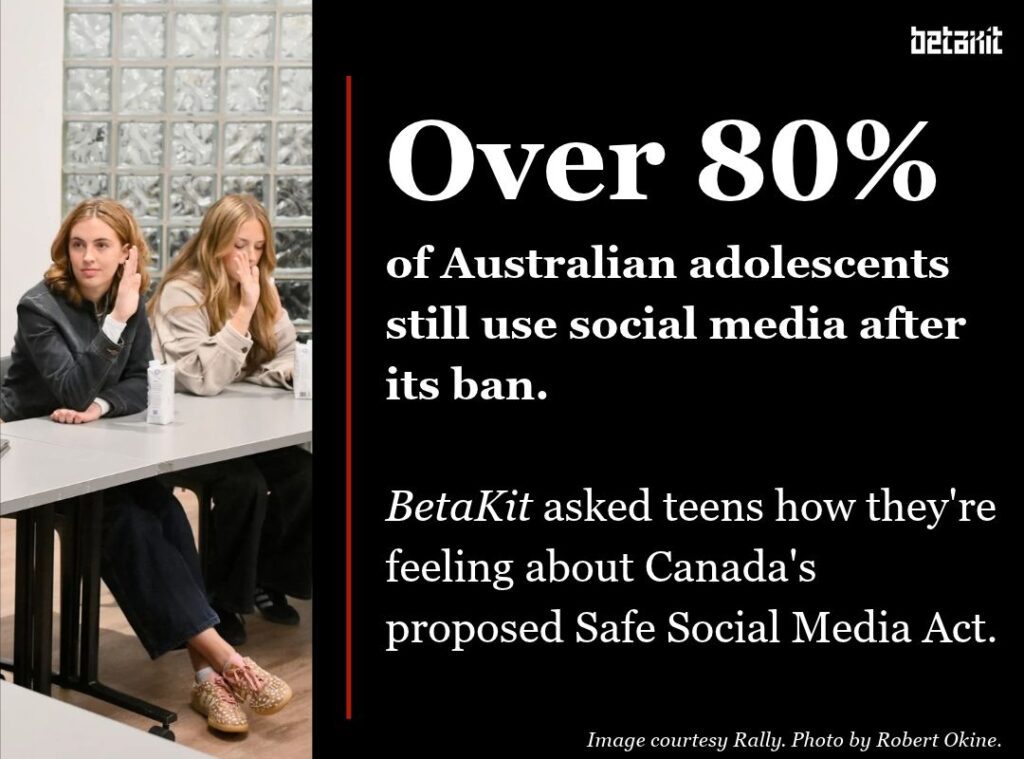
Read more on BetaKit.
The refresh
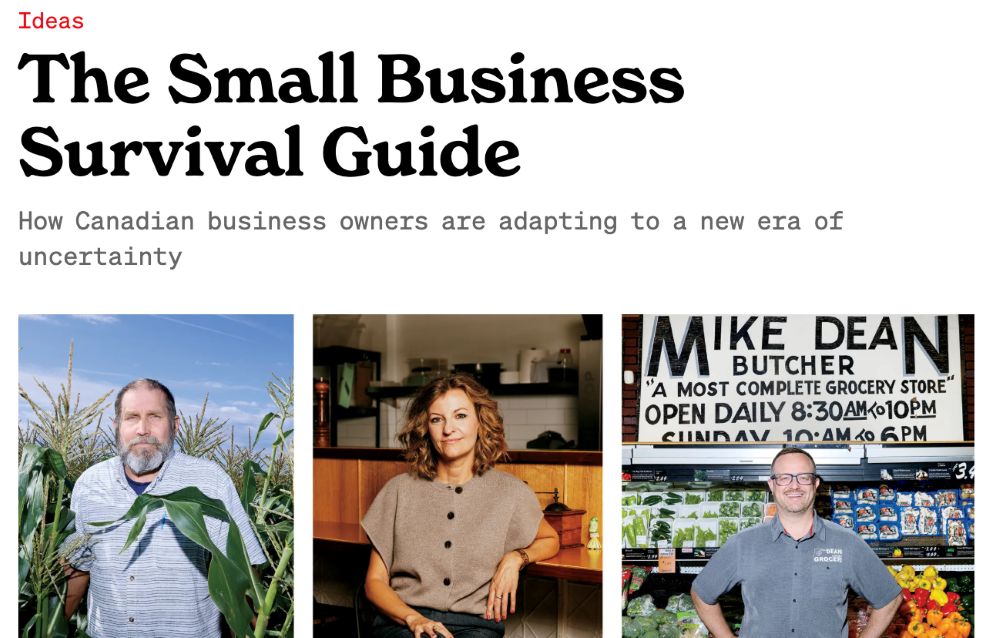
The small business survival guide
There’s never an easy time to run a small business, but between inflation, supply-chain issues, and trade wars, it’s certainly tough right now. Canadian Business and Maclean’s spoke to five entrepreneurs about the challenges they face and the creative strategies helping them adapt as they move forward.

BetaKit Podcast · Oct. 12
“I think that we will look back on prediction markets the same way we look back on altcoins and … NFTs.”
In a wide-ranging interview, Koho CEO Daniel Eberhard discussed becoming Canada’s newest unicorn, (potentially) becoming Canada’s newest bank, the possibilities of launching a telecom, and why Koho won’t touch prediction markets. Watch and listen now ›
Contributors: Alex Riehl (Ottawa staff writer), Douglas Soltys (editor in chief), Jesse Cole (Prairies reporter), Sarah Rieger (managing editor), Trevor Nichols (web editor).
Feature image courtesy SpaceX via Unsplash.