

The tricorder is no longer just a Trekkie’s thing, as fellow BetaKit writer Tom Emrich found out last week. Digital medicine is here, and thanks to the smartphone it can be found in most of our pockets.
Vancouver recently hosted some extremely insightful conversations about the current state and future of digital medicine. Specifically, Genome BC hosted an exceptional evening for the 4th Annual Don Rix Distinguished Keynote Address, featuring Dr. Eric Topol.
Topol is an American cardiologist, geneticist, and researcher, and currently serves as Director of the Scripps Translational Science Institute in La Jolla, California. His talk “”How Digitizing Humans Changes the Future of Medicine” covered the whole spectrum of digital medicine from sensors, to scanners, to DNA sequencing. In Topol’s view, it’s not fair to even call your smartphone, a phone. It’s the gateway to a new world of individualized medicine. His entire presentation is available here, and is well worth watching.
The general conversation about placing the patient at the centre of the healthcare universe continued over two days at the Interface 2013 conference. Organized by Sanotron and entitled “The Future of Health: Smartphones, Wearables, Sensors, Big Data, and You,” it featured an excellent line-up of speakers, discussions, and demos.
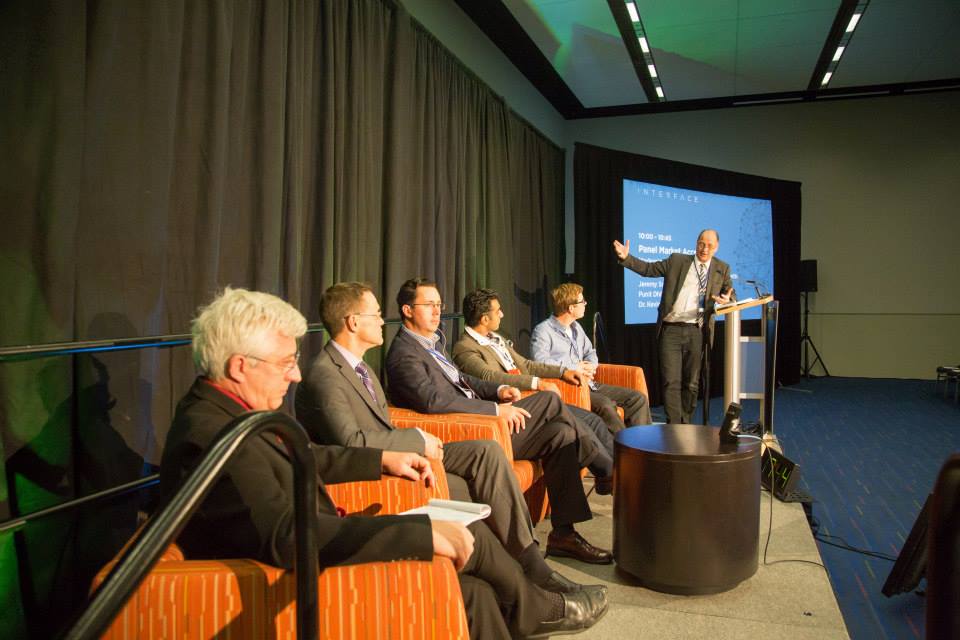
The first panel discussion Panel Trade + Investment and moderated by Dion Madsen, (BDC Venture Capital Health Fund), highlighted the notion that the digital health space is quickly filling up with “me too” apps and products. Finding real differentiation from all of the noise is becoming a challenge.
Rich Osborn of RecapHealth Ventures offered a humorous yet sobering perspective regarding US versus Canadian investment for healthcare startups: “in the US we call it pivot. In Canada you call it fail.” It’s all about runway. Innovating in this space monumentally difficult.
Over a dozen companies ended up taking centre stage at the event, with these five BC digital health startups standing out:
Fatigue Science:is measuring fatigue and accident risk. The technology is improving workplace safety, human health & performance.
LionsGate Technologies: has developed Vital Signs DSP™ a proprietary signal processing platform for the development and commercialization of ultra-low cost vital signs monitoring applications in mHealth.
Ayogo Health: applies game psychology to patient self-care. They have a portfolio of customizable social games and apps to engage, educate, and empower patients with chronic conditions
Medeo; has built a communication platform making it more convenient to see your doctor online.
Curatio: is a personal support & tracking tool designed especially to help people thrive with thalassemia. (We recently reported on Curatio’s $100,000 win as part of 7th annual Health 2.0 Conference in Silicon Valley).
The overarching story playing out over drinks, meals, and networking was the complexity of our healthcare industry. It’s complicated.

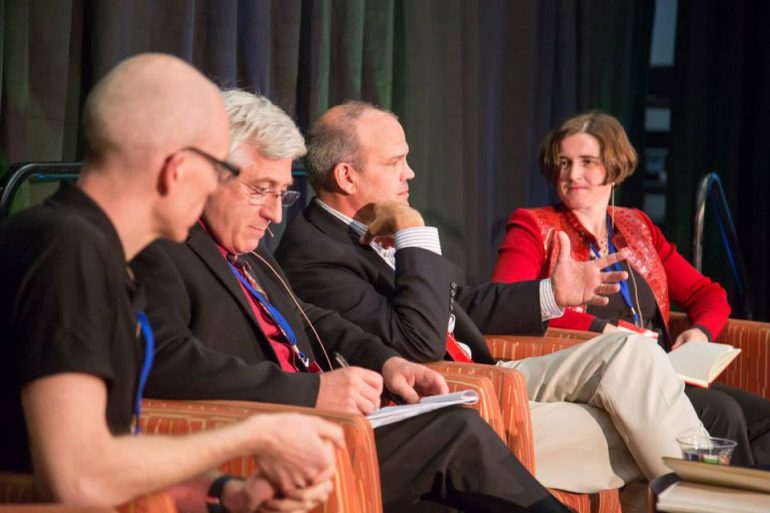
Attendees Lynda Brown (Founder & CEO of Curatio), Michael Fergusson (CEO of Ayogo Health), and Dr. Alexandra Greenhill (Physician and entrepreneur) all shared their thoughts about healthcare while attending a lively panel conversation, “clinical trials and the need for evidence-based data in digital medicine”.
For Brown, she’s always considering the question, “how do we help people adjust behaviours?”
“It all starts with people,” said Brown. “We need to think about what people are going through… person behind the chronic illness, person behind the fertility treatment, person behind the recovery program; what are they actually going through?”
Brown is pushing herself by the idea that technology “can help people have a less isolating experience, better understand their own health, and connect with others going through the same thing.”
Ayogo Health’s CEO Michael Fergusson said “our system is only getting more complex. The more people that are arriving to solve the problems the more complex the system becomes. It’s no longer a space where the only specialists are those with a healthcare background, now we see people with backgrounds in high-tech, software, and even game studio. We’re also seeing more regulatory and technical complexity as a result.” He also notes that “our incumbents are having a tough time keeping up conceptually.”
From Greenhill’s experience, she suggested that “Healthcare is still stuck figuring out and implementing 1.0 technologies. Many stakeholders have not realized technology is passing them by. Rules are completely different in terms of speed. There’s massive bureaucratic institution speed and then there’s startup speed.”
In terms of addressing the more talk-than-action syndrome, Greenhill added, “we should collectively be reminding each other that planning, studying, evaluating, and measuring, are only relevant in the context of action.”
Some health issues are virtually unavoidable. Unfortunately there’s no getting away from our personal genetic makeup. The biggest challenge to a healthier society really isn’t a technical one, rather, it’s the healthcare system itself. It’s too complicated with too many competing self-interests.
And pointing fingers at the system isn’t a fix. Sadly there’s no app for individual accountability. Behaving badly and choosing poor lifestyle habits will keep costing us, and keep killing us, and all the medically valuable devices and applications will not save healthcare from ourselves.