

Canada’s national AI strategy projects that wider use of artificial intelligence could add nearly $200 billion to the economy and create up to 250,000 jobs by 2031.
But there’s a hitch. Only 12.2 percent of Canadian firms used AI in 2025, close to the lowest among international peers. That rate climbed to 19.2 percent in Q2 this year, but most businesses are still on the sidelines.
Kevin d’Entremont,
“The challenge isn’t finding people who can use AI tools. It’s finding people who can combine AI capabilities with deep business expertise.”
TECHNATION
A big part of the problem is a skills gap, said Kevin d’Entremont, president and CEO of TECHNATION, a national association representing Canada’s tech sector. A shortage of specialized expertise—particularly in complex areas like data architecture and advanced technical problem-solving—could slow the spread of AI across the economy and limit the potential productivity gains it can deliver.
Employers already face growing competition and rising wages for specialists in complex areas such as data architecture and advanced technical problem-solving. Across the broader workforce, there’s also a need to boost AI literacy and build trust in the technology so employees can use it confidently and responsibly.
“The challenge isn’t finding people who can use AI tools,” said d’Entremont. “It’s finding people who can combine AI capabilities with deep business expertise. Organizations need professionals who understand data, technology, governance, and business outcomes simultaneously.”
Understanding the tech advantage
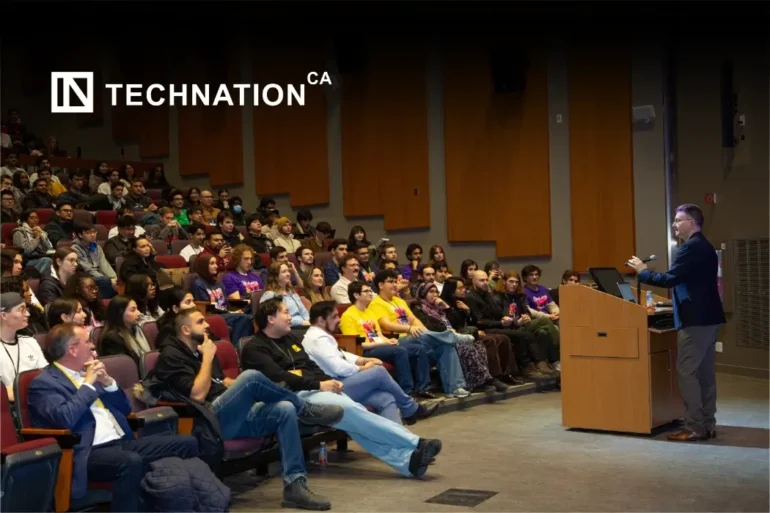
Closing that skills gap is the focus of TECHNATION’s FutureWave 2026. The Nov. 30 conference at Northeastern University in Toronto brings together leaders from industry, education, and government to talk through the skills Canada’s fastest-growing tech sectors will need over the next decade. They’ll also dig into how smaller businesses can hire as they grow and how workforce programs can help bring AI skills and literacy to more Canadians.
Ideas from the day will help shape The Tech Advantage Playbook, a set of practical recommendations to help businesses across sectors, including small and medium-sized companies, nurture talent and develop partnerships with educators.
For d’Entremont, talent is one piece of a bigger agenda. “AI can significantly increase productivity, but we need to build the skills, investment, regulatory frameworks, and AI literacy for responsible AI adoption,” he said.
Hiring for judgment
One big question facing companies today is how to tell whether promising candidates actually have the AI skills they need to do the job.

courtesy TECHNATION.
d’Entremont said employers are seeing a growing gap between what applicants list on their résumés and what they can demonstrate. At the same time, automation and generative AI are disrupting some of the early-career opportunities that have traditionally helped workers gain valuable on-the-job experience.
As AI takes on tasks like drafting content and writing code, employers are now putting more weight on judgment when they hire, he noted. Can a candidate spot a flaw in an AI-generated analysis and decide what to do about it?
The technical depth that takes depends on the role. Engineers, data scientists, and AI risk specialists need advanced skills because they’re accountable for model performance, deployment, security, and compliance. In other roles, such as finance or customer service, it’s more about knowing when the tools can help and when the results need a critical eye to ensure accuracy.
“Not every role requires AI experts, but every role will increasingly require AI literacy,” he said.
From training to results
d’Entremont said closer ties between employers and schools are key to making AI training more widely available and keeping it relevant to today’s jobs. That could mean updating what’s taught about AI, giving teachers more support, and offering short, industry-led certifications so people already in the workforce can build in-demand skills.
Government has a role, too, he noted, pointing to the funding for training and work placements in Ottawa’s AI strategy as a sign of federal support. What really counts, though, is what that support delivers.
“Training is an input; adoption and economic impact are the outcomes that matter,” he said.
The stakes are high. Companies are more likely to expand research and product development where they can find the expertise they need, said d’Entremont. If Canada fails to develop and retain that talent, he warned, the country risks becoming “a purchaser of AI rather than a producer of AI.”
“AI is one of the areas where Canada has a natural advantage in technology and the potential to be a world leader. By building ecosystems of companies around global champions, we can increase the potential for commercialization, jobs, and IP growth in Canada,” he said.
PRESENTED BY

Ready to be part of the conversation? Visit our website to learn more and register for FutureWave 2026.
Feature image courtesy TECHNATION.