


When Canadians talk about healthcare access, the conversation often centres on finding a family doctor. But for many of us, a pharmacy is closer to home, making it one of the most convenient places to get expert advice and treatment.
According to Purya Sarmadi, CEO and co-founder of MedMe Health, 90 percent of North Americans live within about five miles (eight kilometres) of a neighbourhood drugstore. He sees an opportunity to use that access better as provinces expand pharmacists’ responsibilities, from treating common infections to helping patients manage chronic conditions like diabetes and asthma.
Purya Sarmadi, MedMe
“We invest in this because the distance between installing software and delivering care is where most clinical programs stall.”
His company provides an AI-enabled platform for connecting the whole patient journey, from booking and intake to clinical documentation and billing. Since 2019, the Toronto-based digital health startup has grown to serve over 40 percent of the Canadian pharmacy market, supporting more than 30 million patient interactions, according to the company.
MedMe is now bringing that experience to the US, where pharmacies are beginning to take on the clinical role that their Canadian counterparts have been developing, albeit with the added challenge of navigating a more complicated payment system.
“We have shown in Canada what pharmacists can do once they are authorized, paid, and equipped to practice to their full scope, and we intend to make that the standard for pharmacy practice everywhere,” Sarmadi told BetaKit.
Canada’s head start
MedMe deliberately chose Canada as a place to develop its platform alongside pharmacies already putting new models of care into practice.
“Canadian provinces expanded pharmacists’ scope of practice and began paying pharmacies for clinical services years before most US states,” said Sarmadi.
By 2020, the pandemic was bringing more patients into pharmacies for vaccinations and testing, broadening their view of what pharmacists could offer, he added. As demand grew, the number of locations using MedMe rose from about 100 to nearly 1,200 in ten weeks, according to the company.
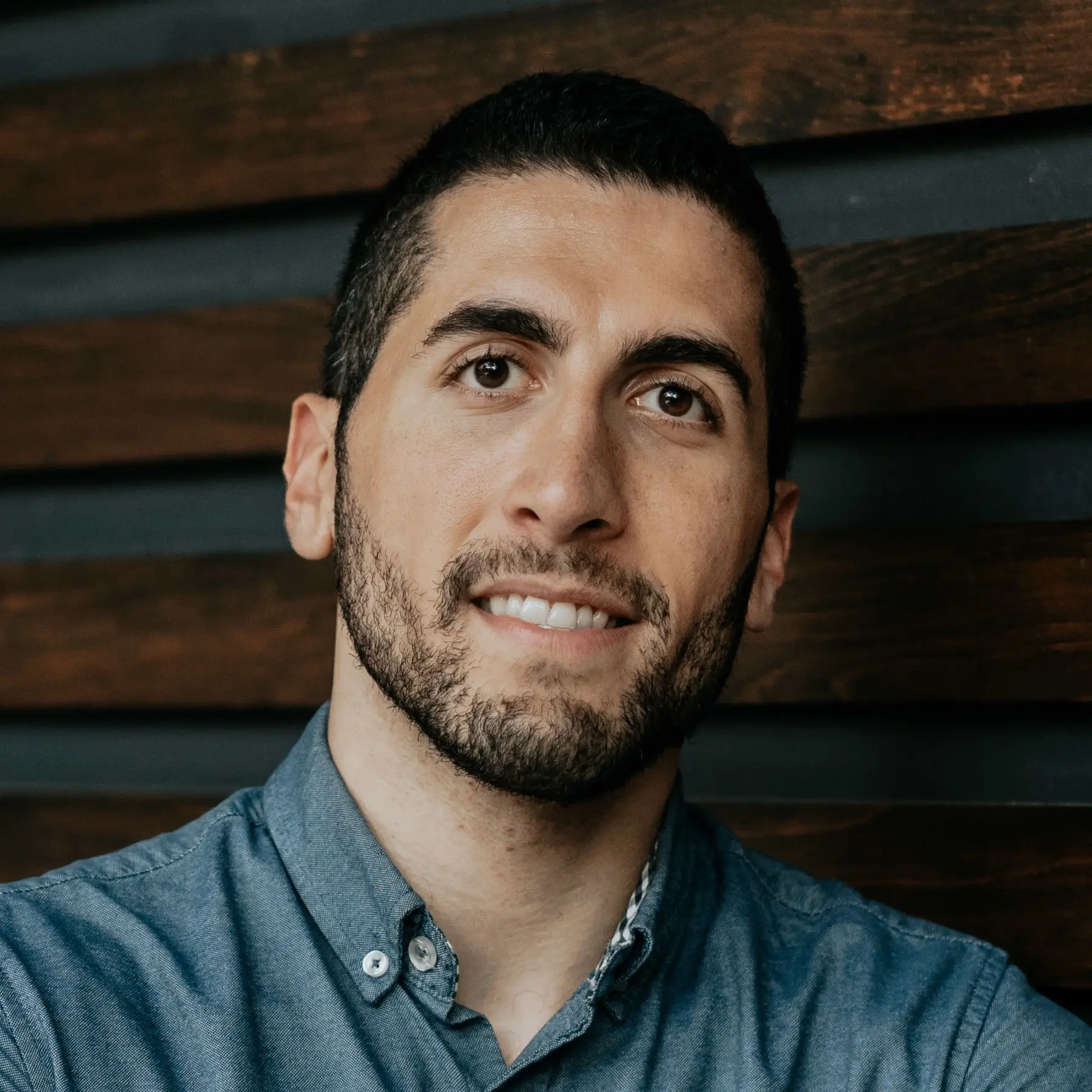
courtesy MedMe.
Working with those businesses revealed two recurring problems, said Sarmadi. Patients didn’t always know what was available at their local pharmacy, leaving appointment slots unfilled, while manual intake systems, phone scheduling, and documentation completed after hours made consultations time-consuming and costly to deliver.
Among its solutions, MedMe introduced Patient Concierge, an AI agent that answers the phone and contacts patients to coordinate refills or schedule deliveries. Its Clinical Assistant drafts consultation notes for pharmacists to review and sign. One Calgary pharmacist puts the cost at about 18 cents a consult, the company says.
But introducing clinical programs also changed how the whole store operated, from staffing and training to measuring returns, Sarmadi said. It meant MedMe’s approach had to go beyond technology. The company built READY, an implementation framework that involves pharmacists and managers in designing routines that fit appointments around dispensing, trains staff one-on-one during launch, and monitors adoption. Locations go live only when their teams are prepared.
“We invest in this because the distance between installing software and delivering care is where most clinical programs stall,” said Sarmadi.
He points to Nova Scotia as an example of how technology can support a larger clinical role for pharmacies. Since 2023, the province has funded a network of Community Pharmacy Primary Care Clinics, which is credited with a decline of close to 10 percent in emergency room visits for non-urgent and less urgent cases.
The Pharmacy Association of Nova Scotia selected MedMe to build and run the booking platform for all 44 clinics, giving patients a direct way to arrange a visit as pharmacies become an established part of the province’s primary care network. The province’s 811 health advice line also directs callers there when it’s the right setting for their care.
That experience gives MedMe a model to draw on as US states invest in community pharmacies to improve access to care in rural areas.
Taking the experience south
MedMe is drawing on its Canadian experience to support its US rollout; it’s now live in more than 350 US pharmacies, with further launches planned through 2027. Critically, they bring an understanding of the correct sequence of steps needed to make clinical care viable.
“Scope expands first, billing pathways follow, and then comes the operational work of building patient demand, delivering care efficiently, changing how the pharmacy runs and, fundamentally, what it is for,” explained Sarmadi. “We entered the US having already built for each of those stages.”
The company also brought its Canadian-built online booking and patient outreach tools, along with experience helping teams adapt to new ways of working. Sarmadi likens that shift to a large company adopting a new customer relationship management system, which requires rethinking roles, processes, and reporting, rather than simply installing software.
“The point is to get the pharmacist in front of the patient at exactly the right moment, and far more often than happens today.”
Purya Sarmadi, MedMe
“Every rollout we run in the US therefore covers the whole operation,” he said.
Unlike Canada’s provincially funded programs with set fees, however, American pharmacies face multiple payers with different coverage and billing requirements. Rejected or denied claims can leave staff chasing payments, making expanding clinical roles more challenging. MedMe’s platform is designed to handle rejection and denial management on its customers’ behalf.
At Pucci’s Pharmacy in Sacramento, Calif., for instance, the owner previously relied on four separate systems for scheduling and intake, documentation, dispensing, and outside billing. He and his clinical pharmacist spent days calling health plans, while some denied claims went unpursued, according to Sarmadi.
Since moving onto MedMe in September 2025, the store has logged about 2,700 clinical appointments. It now handles around 300 a month, up from 140 last winter, and 41 percent of patients book online themselves.
Processing claims across multiple businesses also gives MedMe insight into which payers deny particular treatments, and why. The company incorporates those findings into billing rules and automation used across its platform, reducing the need for each customer to learn through its own trial and error.
Future of pharmacy care
Sarmadi sees a future where pharmacy care continues between appointments. Pharmacists would have access to patients’ medication histories and readings from home monitors, while AI would help coordinate follow-up and routine outreach. If blood pressure readings change or a refill goes uncollected, for example, the team could reach out rather than wait for the patient’s next visit.
“What AI shouldn’t do is make the clinical call,” he said. “The point is to get the pharmacist in front of the patient at exactly the right moment, and far more often than happens today.”
Aaron Bast, managing director at Graphite Ventures, which has invested in MedMe, sees the company’s Canadian roots as a key strength as it pursues its global ambitions.
“MedMe is exactly what we mean by Scale Canadian,” he said. “Purya and the team built where pharmacy care was changing first, earned the trust of Canada’s pharmacies, and are now bringing a proven playbook to a much larger market. Canadian companies don’t have to leave to win globally. They can take what they’ve built in Canada as a model for international success.”
PRESENTED BY

Check out Scale Canadian for more stories of those building in Canada and scaling globally.
Feature image courtesy MedMe.