

Canada’s cleantech sector has a large pipeline of technologies ready for the market, just as the need for them is becoming more urgent.
In a federal survey, nearly two-thirds of tech companies reported having a product at the commercialization stage. But that phase can be the toughest. Moving from pilot to commercial deployment brings a unique set of pressures: larger capital requirements, earlier customer commitments, and investors willing to take on risk.
“More than any time in our history we have the technological solutions that can get us on the right track without compromising growth.”
All of these issues are on the table when MaRS Climate Impact returns to Toronto this fall.
This year’s sixth-annual conference, happening on Nov. 17 and 18, will bring together more than 1,000 entrepreneurs, investors, corporate partners, policymakers, and academics for two days of panels, live debates, and company demos, all focused on scaling Canadian cleantech.
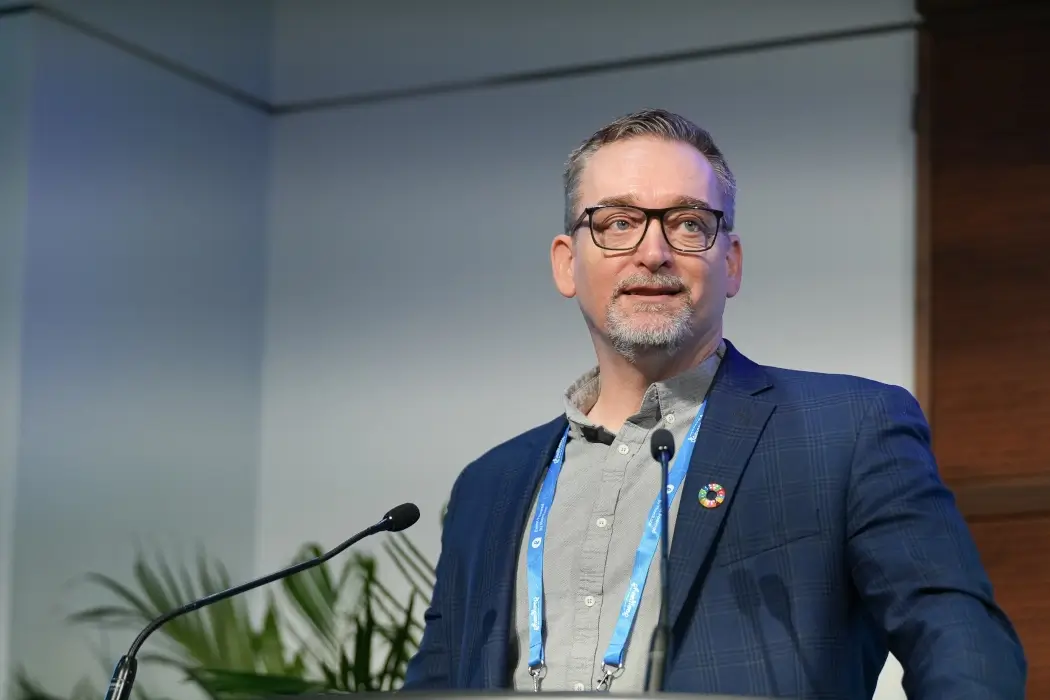
The 2026 program covers Arctic innovation, food and agricultural technology, grid modernization, adaptation technologies, fusion, geothermal, quantum computing, and next-generation water systems. According to Tyler Hamilton, Senior Director of Climate at MaRS, this year’s conference comes as environmental and economic pressures become increasingly intertwined.
“The impacts of climate change and ecological destruction are more visible than ever, but more than any time in our history we have the technological solutions that can get us on the right track without compromising economic growth,” Hamilton said. “Importantly, some of the world’s best and most competitive solutions have been developed right here in Canada.”
Attendees can expect those themes to surface many times across three program tracks.
The “building for resilience” stream will showcase climate tech ventures that are ready to raise their next round of funding. Canadian companies already taking products into domestic and international markets will share some of the practical lessons involved in getting there. This program will also recognize standout companies, founders, and projects through the MaRS Climate Impact Awards.
“Policy, politics, and capital” will unpack corporate venture capital, Canada’s willingness to shoulder more commercial risk, and how cleantech companies can scale in the era of middle-power markets. It will also convene industry leaders to discuss how companies can build first-of-their-kind projects, which are the first commercial-scale deployments of technologies previously proven through pilots or demonstrations.
Finally, the “climate tech spotlight” will focus on the technologies reshaping energy and industry, from quantum computing and next-generation building materials to the growing resource demands of AI hyperscalers. The track will also examine how companies are preparing for climate disruption and geopolitical instability.
The conference comes after a difficult period for Canada’s cleantech sector. Despite a massive period of growth between 2016 and 2022, Canadian venture capital investment in cleantech has declined substantially in recent years. In 2025, cleantech investment reached $660 million, compared with the more than $1 billion raised in 2022.
Survey data from Natural Resources Canada also points to funding shortages for scaling cleantech firms, as well as difficulty attracting customers or investors due to market uncertainty or perceived risk.
Hamilton said the 2024 wind-down of Sustainable Development Technology Canada (SDTC), a longtime source of funding for cleantech companies, added to the disruption. (In 2024, SDTC’s mandate was partially absorbed by the National Research Council’s Industrial Research Assistance Program, following investigations into conflict-of-interest and governance issues at the agency).
“Following a period of market volatility, investors and corporates are exercising significantly more caution before deploying capital,” Hamilton said. “A lot of major cleantech funds are out of dry powder and are fundraising in the same tough environment. Given what’s happening in the market, the burden of proof for hardtech companies—whether that be technical development or commercial traction—is much higher than ever before.”
Climate hardware makes the financing problem especially acute. A software company can often add customers without having to build new physical infrastructure. But a climate venture developing new industrial equipment, fuels, or materials may need to finance its commercial facility before it has demonstrated the economics at full scale.
“Building a first-of-a-kind manufacturing plant costs tens or even hundreds of millions of dollars, but investors willing to write those kinds of cheques are scarce,” said Hamilton. “Connections to the broader ecosystem of potential funders, partners, and customers [can] help them raise their profile and land the deals they need to grow.”
“Some of the world’s best and most competitive solutions have been developed right here in Canada.”
MaRS Climate Impact’s programming is designed to create more of those collisions by bringing cleantech companies into direct contact with potential customers, partners, and investors. Mission from MaRS applies a similar model year-round by pairing climate ventures with potential customers, suppliers, strategic investors, regulators, and policymakers. The program is designed to tackle barriers that can slow commercialization, access to capital, procurement, and regulation.
More than 100 speakers are also expected to take part in this year’s event. Early high-profile names include Anousheh Ansari, CEO of the XPRIZE Foundation; Christian Weedbrook, founder and CEO of Xanadu; and Phil De Luna, co-founder and CTO of CURA, with more to come.
Financing, policy, and market readiness are only part of the agenda. Extreme heat, flooding, and wildfires are also creating more immediate markets for adaptation technology in Canada. Electricity demand from AI and data centres is also putting new pressure on grids and water systems. MaRS wants to examine these issues together, because climate risk, infrastructure, capital, and industrial policy are all bearing on where cleantech gets built and adopted.
“Attendees should walk away with a clear, dual realization: the urgency to deploy climate technology has never been greater,” Hamilton said. “But, more importantly, Canada already possesses the homegrown innovation necessary to meet this challenge.”
PRESENTED BY

Hear more about the latest cleantech solutions at the MaRS Climate Impact conference in Toronto on November 17 and 18. Register now.
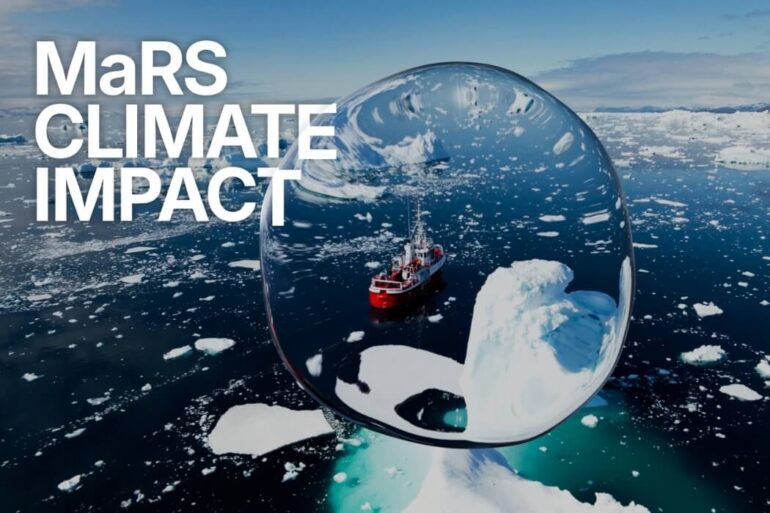
Feature image courtesy MaRS.